Focus area

Water-body restoration & oxygen supply

Lake and pond restoration does not begin with the technology, but with the water body. We measure where and when oxygen is lacking, select the measure on that basis – up to and including aeration close to the bed with Nano-Bubbles – and verify its effect.

The problem

Oxygen deficiency at the bed of a water body allows sapropel to form. Without knowledge of how oxygen develops over time, restoration measures are commissioned on guesswork.

01

The restoration concept rests on a handful of samples. It remains an open question at what depth and in which weeks oxygen is actually lacking.

02

De-sludging, chemical precipitation, aeration: the quotations differ by orders of magnitude. Without knowing how oxygen develops over time, it is hard to justify which option will hold up.

03

After the measure, the baseline reading is missing. There is then no way to show the funding body or the public what has changed in the water body.

Scientific background

It is at the bed of the water body that a restoration succeeds or fails.

In slow-moving or stratified waters, a pronounced oxygen gradient can develop: still sufficient oxygen near the surface, barely any directly above the sediment. That is exactly where it is decided whether organic material is broken down aerobically or whether sapropel forms and persists.

Gradient Oxygen across depth

Areas near the surface can be well supplied with oxygen, while deeper water layers and the zone directly above the sediment become severely oxygen-poor. A surface reading alone does not show this.

Limnological principle
Anaerobic Sediment-water interface

Under low-oxygen conditions, anaerobic processes can intensify, layers of sapropel can form or stabilise, and the release of unwanted substances from the sediment can be promoted.

Limnological principle
70 m Aeration line in pilot operation

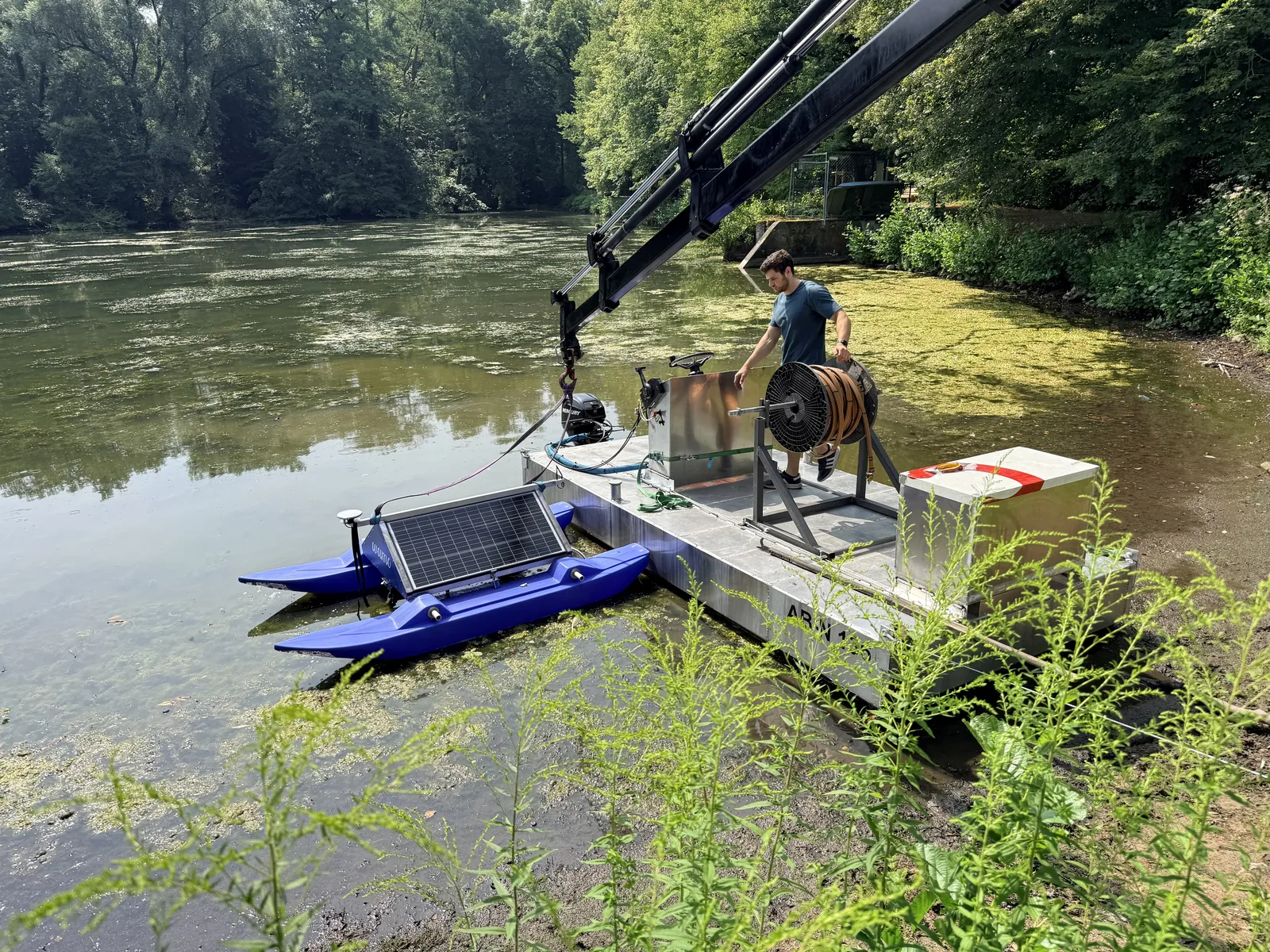
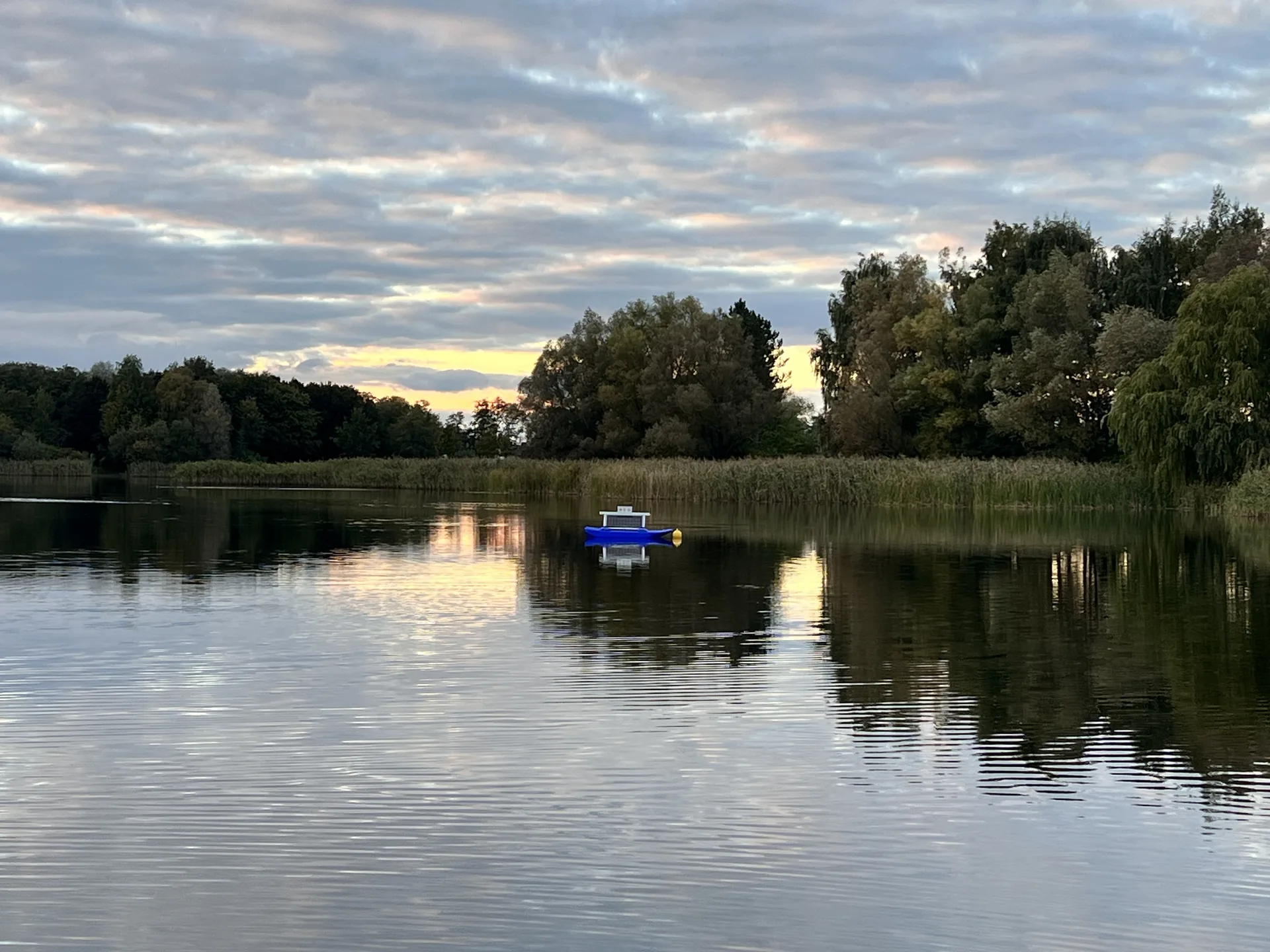
At the Backhausteich, a permanently laid Nano-Bubble line introduces oxygen close to the bed. The pilot demonstrates how this type of project can be monitored using measurement data.

Backhausteich pilot

Sources: limnological principles · Backhausteich pilot installation, e.Ray 2026

Pilot: WAMO Active at the Backhausteich Focus area: blue-green algae & water quality
The solution

Understand first, then aerate

Water-body monitoring, water-body analysis, restoration planning, aeration close to the bed and impact verification all interlock: measure, analyse, act, verify the effect, adjust. Before the measure, measurement establishes when and where critical oxygen conditions arise. During operation, it shows how the water body responds – and output and run times can be adjusted accordingly.

1

Measure and analyse

Oxygen, temperature, pH, conductivity and other parameters across depth and time. This shows which zones and which weeks are critical.

2

Plan and introduce

Selection and sizing of the measure, for example aeration close to the bed with Nano-Bubbles in the zones where oxygen matters most in biological and chemical terms.

3

Verify the effect

The measurement series continues and shows how the oxygen balance and water quality develop. That provides the basis of comparison for adjustment and for evidence.

Use cases

Three types of water body in which oxygen becomes the bottleneck.

Retention basins and water retention

Retention spaces hold water in the landscape for longer. If it stands for a long time at high temperatures, oxygen deficits can develop. Water retention and water-body ecology therefore have to be planned together.

Lakes and ponds with an oxygen deficit

Stratified lakes and shallow ponds with a high nutrient load: only measurement across depth shows at what point the deep water turns and which zone hypolimnetic aeration would actually have to reach.

Storage basins and slow-moving water

Storage basins, firefighting ponds and park waters with little exchange. There, long residence times and warm summers quickly push readings into a range that is critical for fish and the food web.

In practice

70 m Nano-Bubble aeration line

Backhausteich · WAMO Active pilot installation

Pilot with bioversum Jagdschloss Kranichstein · Backhausteich · ongoing

A manageable water body as a test set-up for the entire sequence: measure, introduce oxygen close to the bed, observe the response, then adjust operation accordingly.

Backhausteich · WAMO Active pilot installation
FAQ

Frequently asked questions

What distinguishes aeration close to the bed with Nano-Bubbles from conventional water-body aeration?

Nano-Bubbles are very small gas bubbles that behave differently from coarse air bubbles. They allow oxygen to be introduced in a targeted way close to the bed. The aim is not to inject as much air as possible, but to make sufficient oxygen available in the right places.

How much measurement is needed before a restoration?

A measurement series that covers the critical period is advisable – in the case of oxygen deficits, usually the warm half of the year, when the water body is stratified. It shows the baseline condition and the range of variation, and later serves as the basis of comparison for verifying the effect.

What happens to the sapropel at the bed of the water body?

A better oxygen supply can support the aerobic breakdown of organic matter and improve the conditions for the degradation of sapropel. How strongly and how quickly this happens depends on layer thickness, composition, temperature and nutrient input. We therefore track the measure with measurement data instead of committing to a degradation rate.

All questions in the FAQ →

Why there is no risk

The safe choice for the public sector.

GDPR & EU hostingData in the EU, no third-country transfers, hosted locally.
Documented & traceableGap-free recording and exports that hold up before councils and supervisory authorities.
Autonomous & resilientSolar operation and resilience node – runs even when networks fail.
Funding-readyStandardised exports and lineage for funding and WFD reporting.
Your next step

See your water body from every perspective.