
Active aeration
Oxygen input close to the bed, distributed along the entire length of the line.

Oxygen input close to the bed, distributed along the entire length of the line.
More oxygen supports aerobic microorganisms and natural degradation processes.
More stable oxygen conditions help fish habitats, zooplankton and benthic organisms.
GNSS-based water level information for the situational picture, dry spells and flood events.
Zigbee point-to-point links for robust data transmission even without conventional infrastructure.
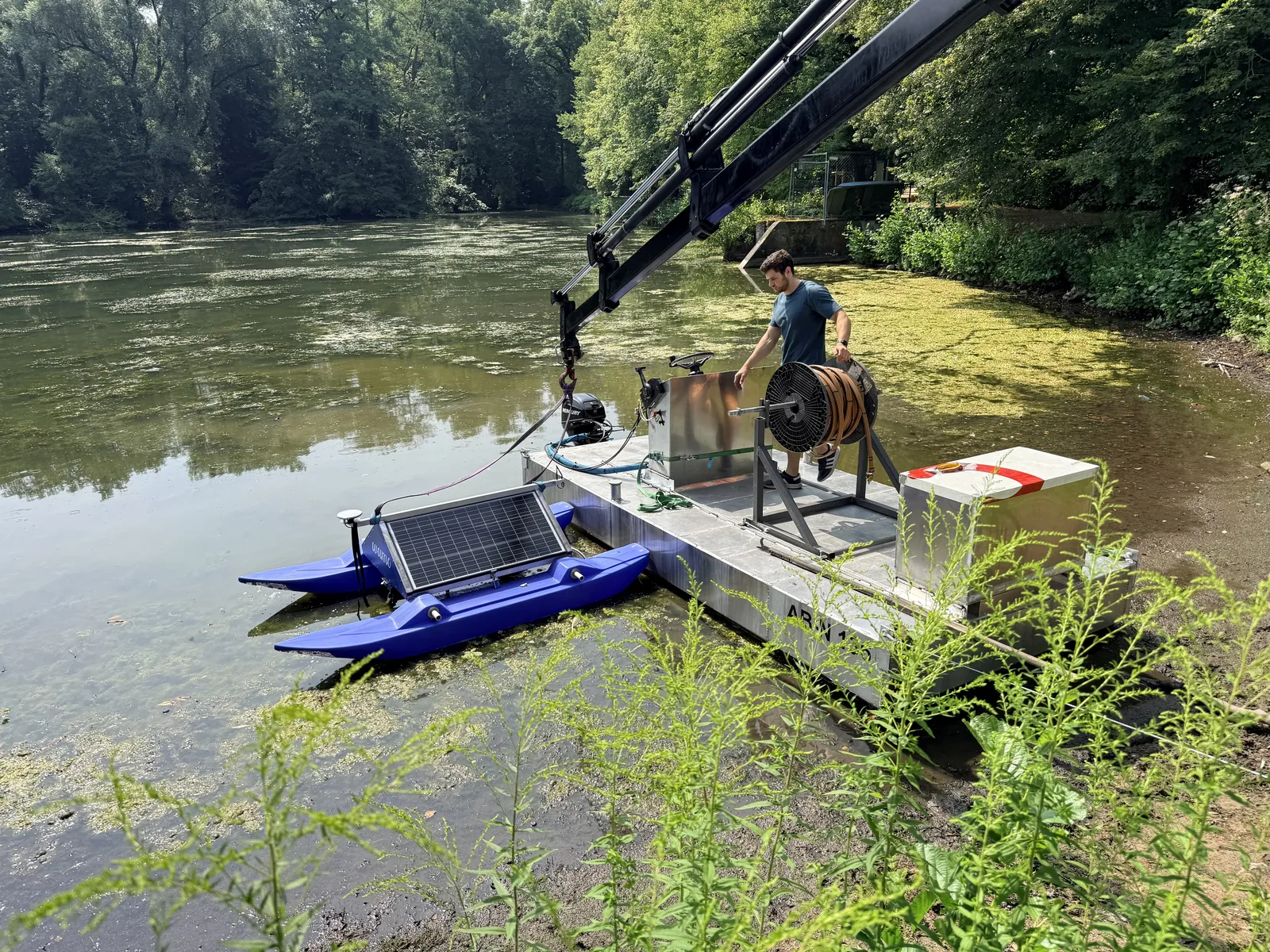
Images from the installation: delivery along the shore path, placing the station in the water by crane and laying the aeration line from the work pontoon.



Oxygen is the currency of a water body: it decides which processes run and which organisms can survive. Active aeration is a supporting measure here, not a substitute for remedying the causes.
Oxygen supports aerobic microorganisms and the breakdown of organic loads.
Better oxygen conditions can stabilise living conditions for fish, zooplankton and benthic organisms.
Active aeration can help to ease periods of stress in impaired water bodies.
The pilot is taking shape in collaboration with bioversum Jagdschloss Kranichstein, ESA Space Solutions and Drausy.


Active water-body aeration, water level information and robust communication for more resilient waters.
Monitoring shows the condition, and WAMO Active intervenes: the pilot combines the measurement technology of the WAMO family with a measure in the water body itself. How the two belong together – from analysis through aeration to verification of impact – is set out in the product overview and in the focus area on water-body restoration.


