Section 82 of the Environment Act 2021 sets out requirements for water companies in England to monitor water quality upstream and downstream of storm overflows and wastewater treatment works. Meeting that challenge takes more than a sensor specification. Stations must also be practical to deploy, maintain and keep running.
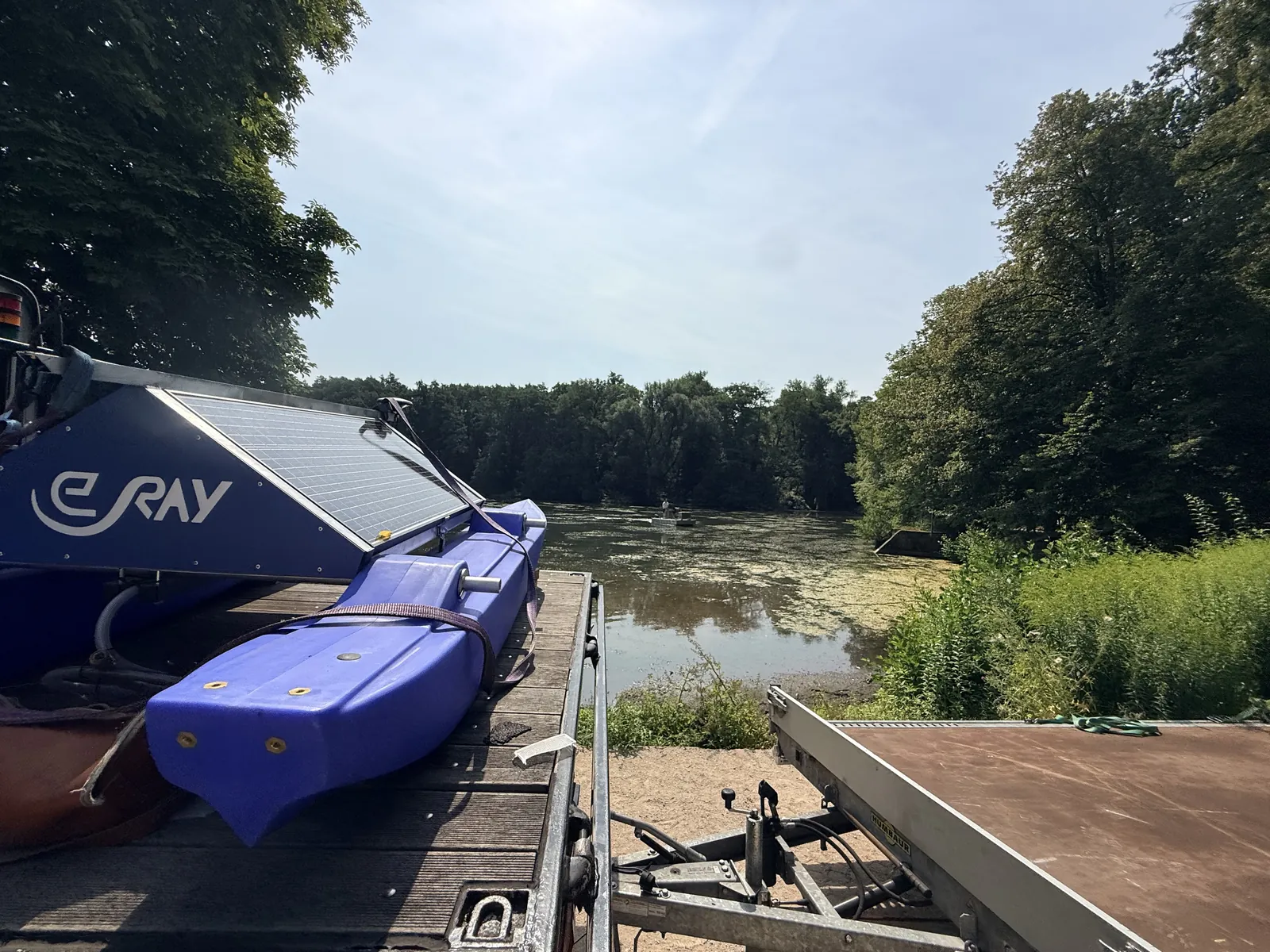
e.Ray has more than 20 autonomous monitoring systems in operation and years of experience servicing equipment in the field. That experience has shaped WAMO: a robust floating station that brings sensors, solar power and communications together directly on the water.
Practical Access, Anchoring and Maintenance
A two-person team can transport WAMO in a van and install or retrieve it. Depending on the site, the station can be anchored from the bank or deployed and serviced using a small boat. For locations beyond vehicle access, e.Ray’s wheeled transport system helps move equipment to the river and bring the complete station back for servicing.
WAMO measures directly in the water without a long pumped sample intake pipe vulnerable to freezing. The station is designed for year-round operation and secure anchoring. The installation approach can be adapted to river access, water levels and the maintenance needs of each site.
Measurements with Catchment Context
WAMO can be configured to measure dissolved oxygen, temperature, pH, turbidity and ammonium, with readings available through a live dashboard. e.Ray can combine these measurements with rainfall, river flow and other catchment data to help teams investigate changes across their monitoring network. Where useful, satellite imagery can add a wider view of the catchment.
Source
Planning a Section 82 monitoring site?
Speak to e.Ray about the river location, sensor configuration and the most practical way to anchor and service the station.
Get in touch →